Jet Lag: Evidence-Based Recovery Strategies
Long-haul flight ahead? Jet lag isn't inevitable. With the right light timing, sleep planning and (sometimes) melatonin, you can cut the recovery time in half.
Jet lag recovery, the evidence-based version.
This guide is a practical, evidence-based approach to jet lag. It works best for travellers crossing 4+ time zones — east-bound trips (e.g. UK to Asia) are generally harder than west-bound (e.g. UK to USA) because we adapt more easily to later sleep than earlier.
We also cover melatonin: who it can help, when to take it, what dose, and the regulatory situation in the UK (it's prescription-only here, unlike in some other countries). Your travel consultation can include a melatonin prescription where appropriate.
What jet lag actually is
Jet lag is the mismatch between your internal circadian rhythm and the local time at your destination. Your body clock — anchored in the suprachiasmatic nucleus of your brain — regulates sleep, wakefulness, hormone release, body temperature, hunger and dozens of other rhythms. When you fly across time zones, this clock doesn't update instantly.
The result: feeling exhausted in the afternoon, alert at 3am, hungry at odd times, mentally foggy, and sometimes mood-disturbed. Symptoms typically last around one day per time zone crossed, untreated.
Why east is harder than west
Most people's natural circadian period is slightly longer than 24 hours, which is why staying up late feels easier than waking up early. When you fly:
- Westward (e.g. UK to USA): your day extends. Your body adapts by staying up later — which it's good at. Recovery is typically 1 day per time zone.
- Eastward (e.g. UK to Asia): your day shortens. Your body has to go to bed earlier than its natural rhythm wants. Recovery is typically 1.5–2 days per time zone.
Crossing 6+ time zones eastward is particularly tough. Most jet lag strategies focus on this scenario.
Light: the single biggest lever
Light is the dominant cue for your circadian clock. Morning light advances your clock (helpful after eastward travel); evening light delays it (helpful after westward travel).
After eastward travel (e.g. UK to Singapore, Dubai, Bangkok)
- Get morning light at destination — walk outside, sit by a window, daylight is key
- Avoid bright light in the late afternoon/evening
- Consider blue-light blocking glasses in the evening
- Aim for at least 30 minutes of outdoor light within an hour of waking
After westward travel (e.g. UK to USA, Canada)
- Stay outdoors in the late afternoon/evening at destination
- Avoid early morning bright light for the first 1–2 days
- Sunglasses help if you must be out in early morning
Sleep timing
The general principle: align with destination time as quickly as possible.
- On arrival, try to stay awake until a reasonable local bedtime (within an hour or two of normal)
- If genuinely exhausted, a short nap (under 30 minutes, before 4pm local) is fine — longer naps disrupt night sleep
- Use the morning light strategy religiously for the first 2–3 days
Pre-flight planning helps too — shifting your bedtime gradually toward destination time in the days before travel reduces the gap to bridge.
Melatonin: useful for some
Melatonin is a hormone your body naturally produces to signal sleep. Supplemental melatonin, taken at the right time, can help shift the circadian clock.
In the UK
Melatonin is prescription-only in the UK (unlike in the US, where it's an over-the-counter supplement). Independent Prescribers can supply it where appropriate — we discuss this at consultation.
How to use it (general guidance)
- Take it 30–60 minutes before your target bedtime at destination
- Dose: 0.5–3mg works for most adults. Higher doses don't necessarily help more
- Use it for 2–5 nights after arrival
- Don't use it during the day or before driving
- It's not a sleeping pill in the traditional sense — it helps shift the clock and improves sleep quality, but you may not feel immediately sleepy after taking it
Who shouldn't use it
- Pregnant or breastfeeding women
- Children (unless specifically prescribed for a medical condition)
- People with autoimmune conditions or on immunosuppressants without specialist guidance
- People with epilepsy (caution)
- People on warfarin, anti-diabetic medications, or several other interacting drugs
Meal timing
Eating aligns secondary circadian rhythms. Strategies:
- Eat at destination meal times from arrival, even if not very hungry
- Some travellers use longer fasts on the flight (12–16 hours) then breakfast at destination breakfast time — evidence is mixed but some find it helpful
- Avoid heavy meals close to local bedtime
Caffeine and alcohol
Caffeine: helpful for daytime alertness when you'd otherwise be sleepy. Avoid within 6 hours of your target bedtime.
Alcohol: generally worsens jet lag. Even though it can help you fall asleep initially, it disrupts later sleep architecture and increases nighttime waking. Skip or minimise for the first few days.
Hydration
Aircraft cabins are very dry. Mild dehydration worsens fatigue and headaches. On long flights:
- Drink 200–300ml water per hour
- Avoid excess alcohol and caffeine
- Use moisturiser and saline nasal spray if prone to dryness
The 'critical day' strategy
If you have an important meeting, performance or event soon after arrival, plan backwards:
- Arrive 1–2 days before the event if possible
- Day before event: maintain destination schedule strictly, get morning light, eat at local times
- Day of event: caffeine in the morning if needed, no naps within 4 hours of presentation, big meal afterwards rather than before
Direction-specific tips
UK to USA (westward)
Easier direction. Stay up late at destination, get evening light, aim for bedtime 1–2 hours later than natural. Often adjusts within 2–3 days.
UK to Asia (eastward)
Harder direction. Pre-trip: shift bedtime earlier by 1 hour per night for 2–3 nights before travel. On flight: try to sleep. On arrival: morning light, no afternoon naps, melatonin in early evening for 3–5 nights. Allow 4–7 days for full adjustment.
UK to Australia (very far east or west)
11–12 hours difference. Some travellers find it equally easy/hard from either direction. Multi-stage adjustment may be needed.
What doesn't work
Things that get marketed for jet lag but lack strong evidence:
- Sleeping pills as primary treatment — they help individual nights but don't shift the clock
- Most herbal 'jet lag' supplements
- 'Jet lag diets' that prescribe specific food sequences with little evidence
Book your travel consultation
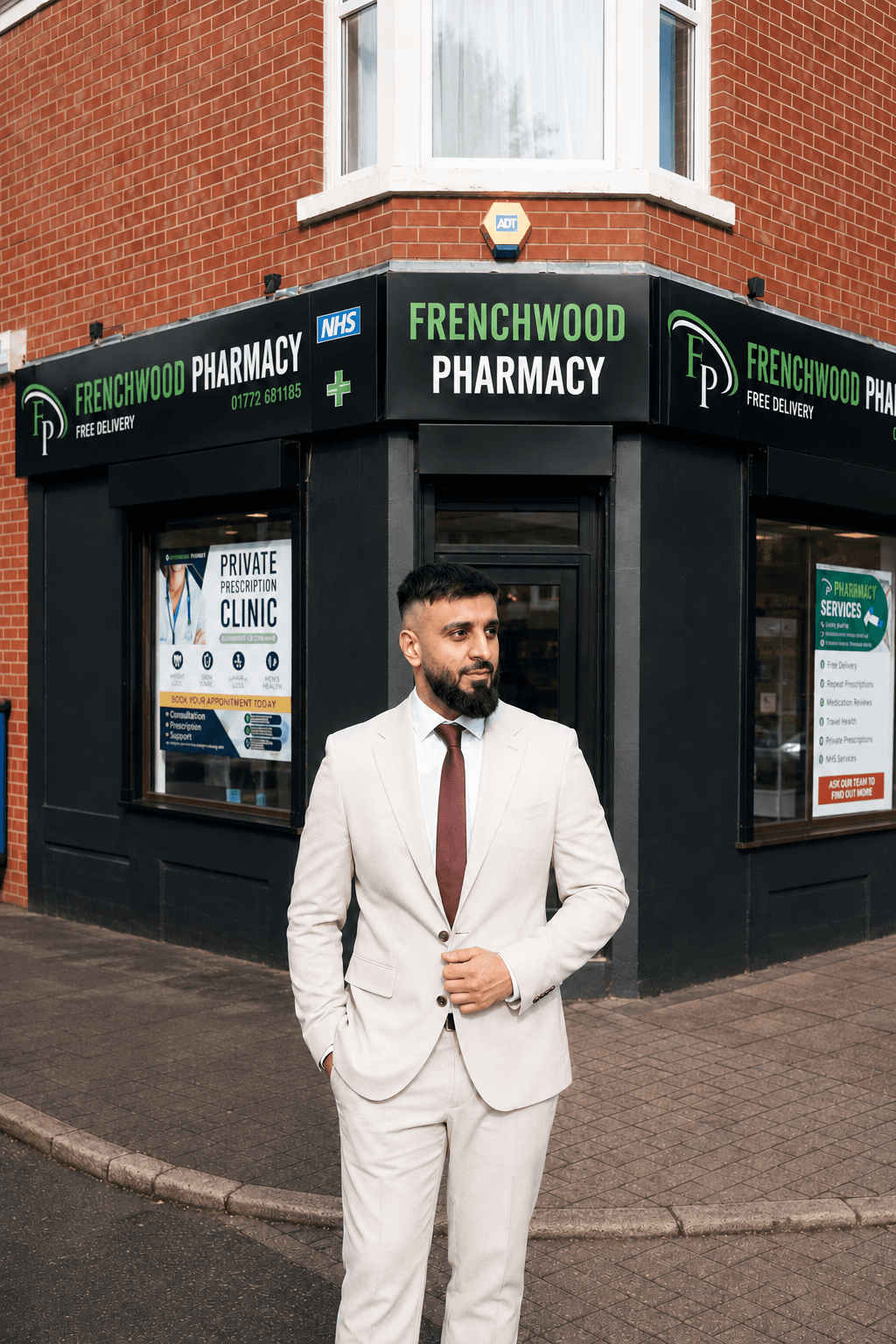
Every Preston Clinic travel consultation can include jet lag planning alongside vaccines and other travel health needs. If melatonin is appropriate, we can prescribe at the same visit. Book online or walk in to Frenchwood Pharmacy on Ruskin Street.
Jet lag advice from Preston's local travel clinic.
Jet lag is what happens when you cross enough time zones to outrun your body clock. Your internal circadian rhythm — the system that tells you when to sleep, when to wake, when to eat, when energy peaks — is anchored to your home time zone. When you suddenly tell your body it's 2pm and your circadian clock thinks it's 4am, you get the classic jet lag symptoms: exhaustion at odd hours, alertness when you should be sleeping, poor concentration, GI upset, mood disturbance.
The evidence on managing jet lag has consolidated over the past decade. The biggest single lever is <strong>light exposure</strong>, used at strategic times to shift your circadian clock forward or backward as needed. Sleep timing, meal timing and selective use of melatonin can all help — but most of the benefit comes from getting light right.
Every appointment is led by Hamza Ali Khan, a registered pharmacist.
Travel vaccinations at Preston Clinic are conducted by a GPhC-registered pharmacist who reviews your itinerary, health background, and vaccine history before anything is prescribed or given.

Hamza Ali Khan
Hamza is the named pharmacist responsible for travel consultations at Preston Clinic. Every appointment is conducted by a registered pharmacist — never delegated to a non-pharmacist — so the person discussing your itinerary is also the person administering the vaccines.
Independent verification: both registrations above can be checked directly on the GPhC public register. Call 01772 491185 with any questions before booking.
NaTHNaC-designated · Yellow Fever CentrePractical jet lag planning, included in every consultation.
Light, sleep, melatonin — all covered in one travel appointment.
Personalised travel advice
Trip-specific jet lag planning alongside vaccines and other travel health needs.
Melatonin available
Prescription-only in the UK. Independent Prescriber can supply where appropriate.
NaTHNaC-designated
Yellow Fever Centre and pharmacist-led travel clinic.
Sleep and timing advice
Light exposure planning, meal timing, sleep strategies tailored to your destination.
Travel kit advice
What to take — melatonin if prescribed, sleep eye masks, blue-light glasses, electrolytes.
Same-week consultation
Last-minute trips often welcome. Book online or walk in.
Three steps to a less jet-lagged trip.
Consultation, plan, prescription items if needed — one visit.
Book your travel consultation
Pick a slot. Tell us your trip details and whether you've had jet lag issues before.
Come to Ruskin Street
1 Ruskin Street, just off Fishergate. Light, sleep, melatonin and other strategies discussed.
Leave with a plan
Specific timing plan for your trip, prescription items if appropriate, travel summary.
Jet lag questions from Preston travellers.
Still have a question? Call the clinic on 01772 491185 and a pharmacist will get back to you.
- TravelHealthPro — Jet lag· accessed 2026-05-18
- NHS — Jet lag· accessed 2026-05-18
- BMJ Best Practice — Jet lag management· accessed 2026-05-18
- MHRA — Melatonin prescribing· accessed 2026-05-18
- GPhC — Register entry — Hamza Ali Khan (Reg. 2233681) at Frenchwood Pharmacy· accessed 2026-05-18
Individual responses to jet lag interventions vary. Melatonin is prescription-only in the UK and is appropriate for some travellers, not all. Your consultation tailors advice.
On Ruskin Street, just off Fishergate. Free patient parking.
Right in the city centre on Ruskin Street, just off Fishergate.
Long-haul flight ahead? Get jet lag planning plus any vaccines you need in one visit.
Jet lag wrecking your trips? Evidence-based recovery strategies for UK travellers — light exposure, melatonin, fasting, sleep timing. Pharmacist-led guidance.