Travel Clinic in Frenchwood
Travel vaccines and certificates right in the heart of Frenchwood — Frenchwood Pharmacy on Ruskin Street, walking distance from anywhere in the area.

Frenchwood's local travel clinic, on your doorstep.
We stock every common travel vaccine — Yellow Fever, Hepatitis A and B, Typhoid, Rabies, Meningitis ACWY (mandatory for Saudi entry), Japanese Encephalitis, Cholera, Dengue (Qdenga), Chikungunya and more — and routinely prescribe and dispense malaria prophylaxis (Malarone, Doxycycline, Mefloquine) in the same appointment.
For Yellow Fever, Rabies, Hajj certificates and last-minute trips — we'll see you the same week, often the same day, with at least two hours' notice. No referral needed.
Your travel vaccination clinic in Frenchwood.
Preston Clinic is a private travel clinic operating from Frenchwood Pharmacy on Ruskin Street — right in Frenchwood itself, walking distance from anywhere in the area. Free patient parking on-site if you do drive. No GP referral, no waiting list, no chasing the surgery.
The clinic is led by Hamza Ali Khan (MPharm, IP), a GPhC-registered Independent Prescribing Pharmacist who reviews your itinerary, vaccine history and medical background before anything is prescribed or administered. Frenchwood Pharmacy is a NaTHNaC-designated Yellow Fever Vaccination Centre (GPhC premises 1033851), authorised to issue valid International Certificates of Vaccination (ICVP) on the day of your appointment.
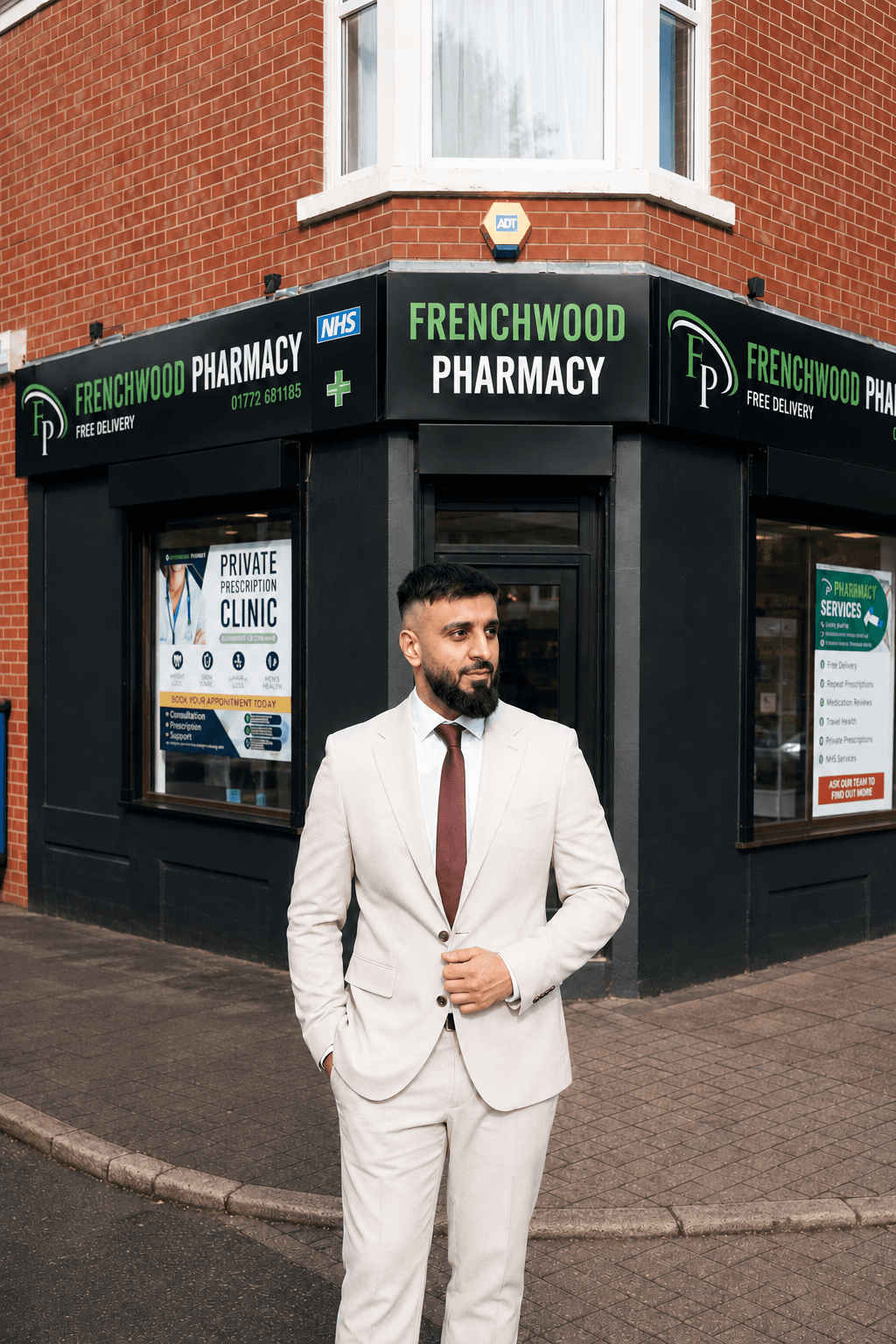
Every appointment is led by Hamza Ali Khan, a registered pharmacist.
Travel vaccinations at Preston Clinic are conducted by a GPhC-registered pharmacist who reviews your itinerary, health background, and vaccine history before anything is prescribed or given.

Hamza Ali Khan
Hamza is the named pharmacist responsible for travel consultations at Preston Clinic. Every appointment is conducted by a registered pharmacist — never delegated to a non-pharmacist — so the person discussing your itinerary is also the person administering the vaccines.
Independent verification: both registrations above can be checked directly on the GPhC public register. Call 01772 491185 with any questions before booking.
NaTHNaC-designated · Yellow Fever CentreEverything you need in one appointment.
No follow-up bookings. No 'come back next week for the second jab'. We sort the lot in one visit where clinically possible.
Destination risk assessment
Itinerary-specific risk review against the latest NaTHNaC and WHO advice — not a generic checklist.
Every travel vaccine in stock
Yellow Fever, Hep A, Hep B, Typhoid, Rabies, Japanese Encephalitis, Meningitis ACWY, Cholera, Dengue, Chikungunya and more.
Yellow Fever certificate (ICVP)
NaTHNaC-designated centre. Valid International Certificate of Vaccination or Prophylaxis issued on the day.
Malaria tablets if needed
Independent Prescriber on-site — Malarone, Doxycycline or Mefloquine prescribed and dispensed in one visit.
Travel health summary
Written summary of every jab, tablet and bite-avoidance recommendation — handy if your employer or insurer asks.
Families welcome
Children from 9 months for Yellow Fever, earlier for some other vaccines.
Three steps from booking to fully vaccinated.
Pre-screen, vaccinate, certificate. Usually 30 minutes total.
Book online or call
Pick a slot. Tell us where you're going, when, and for how long. We'll send a short pre-appointment form so we're ready when you arrive.
Come to Ruskin Street
1 Ruskin Street, just off Fishergate in central Preston. Hamza or one of the team will run through your itinerary and confirm which vaccines and tablets you need.
Vaccinated and certified
Get your jabs the same visit, walk out with malaria tablets if needed, plus a Yellow Fever certificate and written travel-health summary. Most appointments take 20–30 minutes.
Common questions from Frenchwood travellers.
Still have a question? Call the clinic on 01772 491185 and a pharmacist will get back to you.
- TravelHealthPro — Country-specific travel health advice· accessed 2026-05-17
- NHS Fit for Travel — Vaccine recommendations by destination· accessed 2026-05-17
- WHO — International travel and health, 2024· accessed 2026-05-17
- UK Health Security Agency — Green Book· accessed 2026-05-17
- TravelHealthPro — UK Yellow Fever Vaccination Centres· accessed 2026-05-17
- General Pharmaceutical Council — Register entry — Hamza Ali Khan (Reg. 2233681) at Frenchwood Pharmacy· accessed 2026-05-17
Information on this page is general guidance from Preston Clinic, operated by Frenchwood Pharmacy (GPhC premises 1033851). Individual vaccination needs depend on your specific itinerary, health history, and time of year. A travel consultation determines what you actually need.
Walking distance in Frenchwood. Free patient parking.
Walking distance — Frenchwood sits around Ruskin Street, the clinic is in the heart of it.